
From Dignity to the Ballot Box: Ombudsperson will Monitor Whether Senior Citizens in Care Facilities Can Fully Exercise Their Right to Vote in the 15th Parlamentary (Saeima) Elections
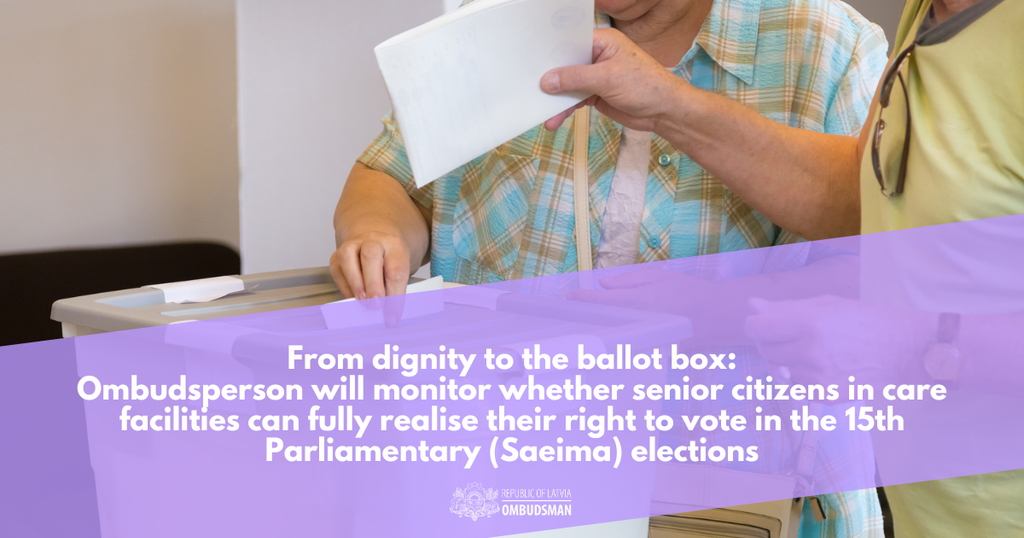
In preparation for the 15th Saeima elections, the Ombudsman’s Office will monitor the voting process throughout Latvia, paying particular attention to senior citizens’ ability to fully exercise their right to vote in social care centres, also known as nursing homes. Improving the quality of life of senior citizens is one of Ombudsperson Karina Palkova’s priorities; therefore, this year’s monitoring activities are specifically focused on ensuring that every senior citizen who wishes to vote is provided with the opportunity to do so.
“Respect for seniors, their participation, and their opportunity to influence decisions that affect their community do not end the moment an individual enters a care facility. In a democratic country, every citizen who is eligible to vote must have a genuine opportunity to exercise this right. Therefore, we want to ensure that the organisation of elections in social care facilities complies with legal requirements and the principles of good governance and human rights,” emphasizes Ombudsperson Karina Palkova.
The right to participate in democratic processes is a fundamental human right, regardless of a person’s age, health status, or place of residence. Seniors in social care centres often face various practical obstacles, such as health issues, limited mobility, or dependence on others, which may hinder their ability to participate in elections. Therefore, it is particularly important to ensure that the voting process is organised in a way that is accessible, understandable, and respectful.
On election day, representatives of the Ombudsman’s Office will visit social care centres and observe the voting process, paying particular attention to whether the secrecy of the vote is ensured, whether seniors have the opportunity to receive assistance from a person of their choice, and whether they are provided with the necessary information about the voting process. Special attention will also be paid to preventing undue influence or any other circumstances that could restrict seniors’ freedom of choice.
Representatives of the Ombudsman’s Office also plan to gather information on the experiences of residents and staff in social care centres to identify the obstacles seniors may encounter during the election process and determine what improvements may be needed in the future. This approach will not only allow for an assessment of compliance with applicable legal requirements but will also help identify examples of good practice and areas requiring further improvement.
Following the elections, the Ombudsman’s Office will summarise its findings and conclusions regarding seniors’ ability to participate in the voting process in care facilities for older persons. The information gathered will be used to develop recommendations for the relevant authorities and to promote an even more accessible and inclusive electoral process for seniors in the future.